
The wrong pot doesn’t just look out of place; it can quietly work against the plant inside it. Too small and roots crowd and dry out fast. Too big and water sits where it shouldn’t. Getting the size right affects root development, moisture retention, plant choice and how easily a container can be moved, long before it affects how the garden looks.
In this guide, the team at Pots Wholesale Direct compares different pot sizes and explains how plant type, root space, watering needs, material and placement can influence your choice.
Quick comparison of large planters vs standard pots
| Factor | Large planters | Standard or medium pots |
| Visual impact | Create a strong focal point in entrances, courtyards, patios and commercial spaces. | Add greenery to smaller areas without overwhelming the space. |
| Best suited plants | Trees, palms, established shrubs and screening plants. | Indoor plants, patio greenery and smaller shrubs. |
| Root capacity | Provide more room for broad or mature root systems. | Suit plants with moderate root growth and a smaller overall footprint. |
| Watering | Hold more soil and usually retain moisture for longer. | Dry out more quickly and may need more frequent watering. |
| Weight and movement | Require more planning once filled, although lightweight materials can make placement easier. | Generally easier to lift, rotate and rearrange. |
| Typical placement | Entrances, garden beds, courtyards, large patios and commercial outdoor areas. | Balconies, indoor areas, compact patios and spaces beside furniture. |
How do large planters and standard pots compare?
Large planters and standard pots differ in visual impact, root capacity, watering needs and ease of movement. Comparing these factors can help you choose a pot that suits the plant and its intended location.
Visual impact and placement
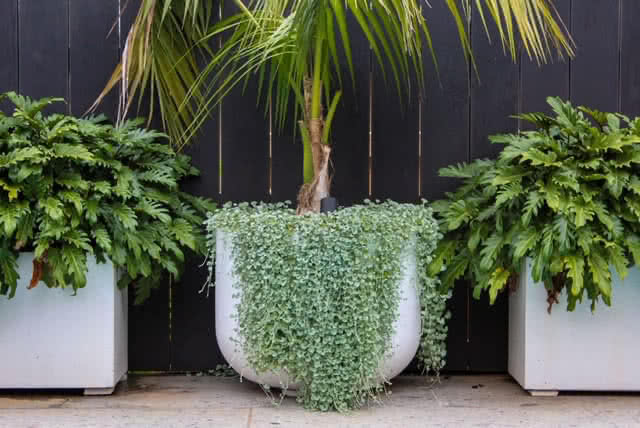
Large pots work well in areas that need a clear visual anchor. A pair of planters can frame an entrance, while a single oversized pot can define a patio, courtyard or garden bed.
Their larger soil capacity also supports trees, palms, established shrubs and screening plants. These large pot plants need enough room for their roots to spread as they mature. In commercial settings, large planters can divide outdoor dining areas, soften building entrances or add greenery to open paved spaces.
Medium pots have a more compact footprint. They can sit beside outdoor furniture, line a walkway or add greenery to smaller entrances without taking over the surrounding area.
Root space and plant suitability
Large plant pots and planters provide more soil volume for trees, palms, established shrubs and screening plants with broader root systems. Medium-sized plant pots suit indoor plants, patio greenery and smaller shrubs that need room to grow without requiring the footprint of a large planter.
The plant’s existing root ball can then help narrow down the right size. Choose a pot slightly wider than the root mass so the roots have space to develop without sitting in too much unused soil.
Pot depth is a separate consideration and applies to both large and medium-sized options. Shallower shapes suit herbs, succulents and plants with compact roots, while deeper pots are better for shrubs, palms and small trees with roots that extend further below the surface. Medium pots are often suitable for fiddle-leaf figs, monstera and peace lilies, particularly in indoor spaces, sheltered balconies and compact patios.
Soil volume and watering needs
Big plant pots hold more potting mix, which usually allows them to retain moisture for longer. This can reduce watering frequency and provide a more stable growing environment for plants with larger root systems.
Medium-sized plant pots contain less soil, so they tend to dry out more quickly during hot or windy conditions. They may need more frequent watering, particularly on exposed patios and balconies. Their lower soil volume also makes them easier to lift, rotate or rearrange as plants grow.
Material and weight
The overall weight of a planted pot depends on its size, material and soil volume. Medium-sized pots are generally easier to lift, rotate and reposition, while larger pots require more planning once filled.
Lightweight materials can reduce this difference. Lightweight GRC StoneLite planters weigh about half as much as standard concrete or ceramic pots while retaining the strength needed for outdoor use. StoneLite, GRC and Lightweight Terrazzo pots offer “half the weight and double the strength” of a standard pot.
For medium-sized pots, this lower weight supports regular rearranging across patios, balconies and indoor areas. For oversized pots, it makes transport and placement more manageable, especially where access is limited by side paths, lifts or narrow commercial entrances.
Large pots vs extra-large pots
The main differences between large and extra-large pots are soil volume, visual scale and placement requirements. The right option depends on the size of the plant, the available area and how easily the filled pot can be positioned.
When a large pot is enough
Large plant pots suit patios, balconies, entrances and pool areas where a substantial planter is needed without taking up excessive space. They provide enough soil for established shrubs, smaller palms and screening plants while remaining easier to incorporate into residential layouts.
They can frame an entrance, anchor an outdoor seating area or create a focal point within a garden. Large pots also require less planning around access and finished weight than extra-large containers.
When to choose an extra-large planter
Extra-large pots are better suited to mature trees, substantial palms and dense screening plants with larger root systems. Their increased soil volume also gives big pot plants more room to grow between repotting.
In commercial landscapes, extra-large planters can match the scale of building facades, hotel entrances and public courtyards. Their size requires greater planning around access, placement and the total weight once filled. Lightweight materials can make transport and positioning more manageable for gardeners and landscapers.
How to prepare planters for drainage and placement
Good drainage and a suitable position help protect plants across small, medium, large and extra-large pots. A few checks before planting can reduce waterlogging and make future care easier.
- Check the drainage holes
Make sure each drainage hole is clear before adding soil or planting material. This allows excess water to leave the pot rather than collect around the roots.
- Add gravel and a flyscreen barrier
Follow our pot planting guide for advice on adding gravel and placing a flyscreen barrier inside the container. The barrier helps keep planting material in place without blocking drainage.
- Raise the pot with pot feet
Pot feet lift the base away from paving or soil, giving water space to flow from the drainage holes. Our pot feet information explains how they can help reduce blocked openings and waterlogging.
- Choose the position before planting
Consider sunlight, exposure and access before filling the pot. Medium-sized pots may be easier to move later, while large and extra-large planters can become heavy once filled with soil and established plants. Place each container on a level surface that can support its finished weight.
Shop pots of all sizes from Pots Wholesale Direct for your space
The right pot size should support the plant’s roots while fitting the available space and watering routine. Pots Wholesale Direct offers small, medium, large and extra-large pots in a wide range of shapes, finishes, colours and lightweight materials. With more than 30 years in the industry, direct-from-supplier pricing and delivery across Australia, the team can help you compare options for a home garden or commercial project.
Browse our pot collections online or call 1300 139 173.