

Pot Planting Guide
For the best results when learning how to plant in pots, good drainage is essential. Water trapped in the pot can cause cosmetic damage or even structural failure. It will also drown your plants by preventing their roots from getting the oxygen they need to thrive. Our pot planting guide covers the key steps for preparing your pots correctly, from creating effective drainage to choosing the right potting mix for healthy plant growth.
download planting guide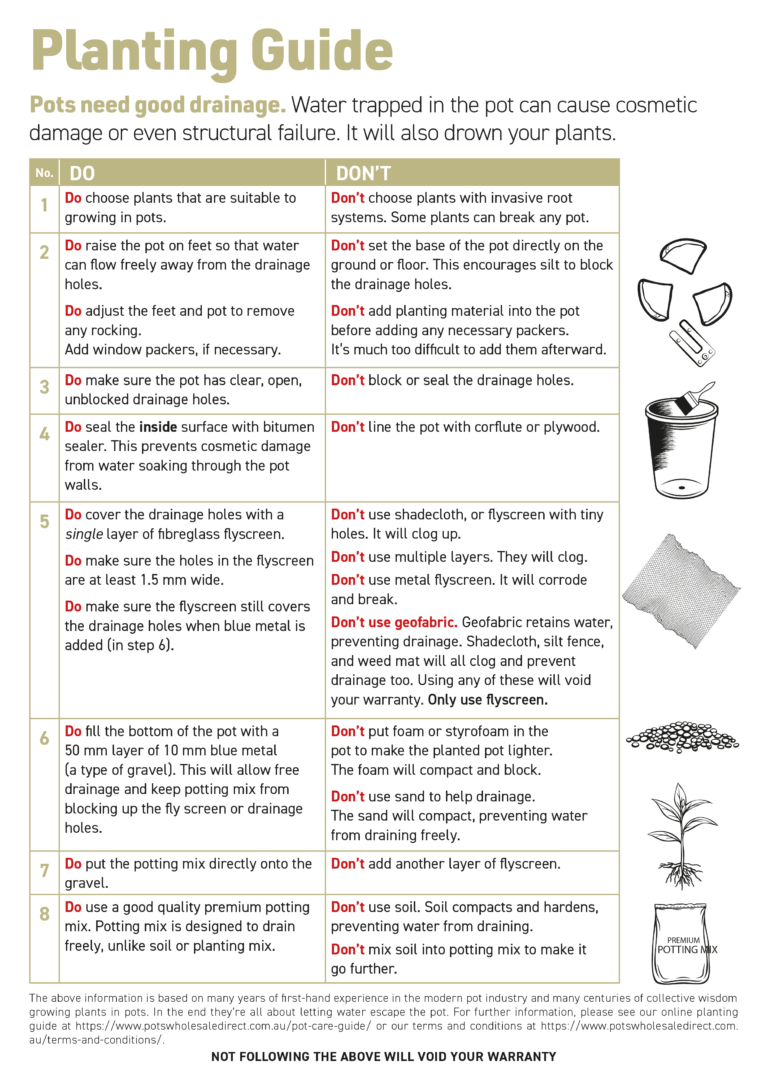
How to Plant in Pots
Learning how to plant in pots correctly gives your plants the best chance to establish healthy roots and thrive. Once you’ve chosen an appropriately sized pot, follow these basic steps:
- Check the drainage holes — Make sure they’re clear so excess water can escape freely.
- Add a fly screen and aggregate — Follow the drainage recommendations above to prevent the holes from becoming blocked.
- Add potting mix — Partially fill the container with a quality mix suited to your chosen plant.
- Position your plant — Place the root ball at an appropriate depth, avoiding burying the stem or trunk deeper than it was previously planted.
- Backfill the pot — Add more potting mix around the root ball and gently firm it into place.
- Water thoroughly — Give the plant a thorough initial watering and check that excess water drains freely from the base.
Use this pot planting guide alongside the specific growing recommendations for your chosen plant, as soil, sunlight and watering requirements vary between species.
Create a Strong Drainage Base
We recommend filling the bottom 100 mm of your plant pot with a 10 mm aggregate to ensure free-flowing drainage. We sell 10 mm blue metal in 20 kg bags for $11.95 per bag, but any hardware store should have some in stock. Do not use finer aggregates, such as sand or tiny pebbles.
Fly Screen
To prevent gravel or potting mix from falling through the holes at the bottom of the pot, we recommend placing a single layer of fly screen in the bottom of the pot. Use a fibreglass or plastic fly screen instead of a metal one, as the metal type will corrode and break. The holes should be at least 1 mm wide to prevent clogging, but we recommend 1.5 mm. We sell the following pre-cut sizes for your convenience:
| L | W | Price |
| 30 | 30 | $1.95 |
| 61 | 61 | $2.95 |
| 91 | 46 | $3.95 |
| 91 | 91 | $6.95 |
Pot Feet
We recommend raising your plant pots on pot feet to prevent silt clogging and to help ensure good drainage. We sell the following styles of feet:
| L | W | H | Price | Custom |
| 9 | 9 | 2 | $3 | $5 |
| 9 | 9 | 4 | $10 | |
| 15 | 15 | 2 | $8 | |
| 12.5 | 12.5 | 10 | $10 |

You can learn more from our Pot Feet Information.
Tip: Position Your Pot Before Planting
Large plant pots can become extremely heavy once filled with aggregate, potting mix and plants. Whenever possible, decide where the container will live before you begin planting.
Consider how much sunlight the plant requires, whether the position is exposed to strong winds and how easily you’ll be able to access it for watering and maintenance. You should also make sure the surface underneath is stable and suitable for the combined weight of the filled pot.
Watering Your Potted Plants
There’s no single watering schedule that suits every container. How quickly potting mix dries depends on factors such as the plant species, pot size and material, sunlight, wind, temperature and season.
Check the soil regularly rather than watering automatically on a fixed schedule. During warm or windy periods, containers may dry out faster, while plants may require less frequent watering during cooler conditions.
If you need to manage water runoff around patios or other surfaces, explore our pot and plant saucers. Always make sure your setup remains appropriate for the drainage requirements of the plant.
Protect and Maintain Your Pots
Good planting practices benefit the plant, while appropriate care can also help protect the container itself. Keep drainage openings free of roots, silt and debris, and periodically check the pot, drainage setup and pot feet for signs of problems.
Some pots may also benefit from sealing depending on their material, intended use and location. Read our guide to sealing your pots to learn more about when this may be appropriate.
Over time, monitor your plants for signs that they have outgrown their containers, such as densely congested roots or declining growth. Refresh or replace potting mix when necessary and repot plants when they require additional space. For further ongoing care advice, see our Pot Plant Maintenance Plan.
Create a Pot Display That Suits Your Space
Once the practical requirements are covered, consider how your plant pots work together visually. Varying heights and shapes can create an informal layered arrangement, while repeating matching planters produces a more structured look.
Colour can also help connect your pots with surrounding architecture, paving or garden features. If you’re planning a coordinated scheme, explore our Custom Pot Colours to see the available options. With the right container, planting setup and ongoing care, your pots can provide healthy growing conditions while becoming a lasting part of your indoor or outdoor space.
FAQs
Drainage & Preparation
Yes. Use a single layer of fibreglass flyscreen to prevent potting mix from escaping or blocking the drainage holes while still allowing water to flow freely. Avoid metal flyscreen, geofabric and other materials that may corrode, retain water or clog drainage.
Avoid sand, as it can compact and restrict water flow. Instead, place a 50 mm layer of 10 mm blue metal over the flyscreen to create a free-draining base, then add your potting mix directly on top.
Placing a pot directly on the ground or a flat surface can allow silt to clog the drainage holes. Raise it on pot feet or suitable risers so excess water can flow freely away from the base.
Soil & Filling
No. Garden soil can compact and harden in containers, restricting drainage and airflow around the roots. Use a high-quality premium potting mix designed to drain freely, and avoid mixing garden soil into it.
No. Foam and polystyrene can compact and obstruct drainage. For reliable drainage, use the recommended blue metal base and place your potting mix directly on top.
Pot Protection & Maintenance
Seal the inside surface of the pot with a suitable bitumen sealer before planting. This helps prevent water from soaking through the pot walls and causing cosmetic damage or staining.
Proper drainage is important for protecting your pot from water-related damage. Keep drainage holes clear and avoid allowing water to remain trapped within the pot, particularly during changing weather conditions.
Choosing the Right Fit
Choose a pot that provides enough space for the plant’s current root ball and future growth. For trees and larger shrubs, make sure there is sufficient depth and width for the roots to develop without overcrowding.
Yes. Avoid plants with invasive or aggressive root systems, as vigorous roots can eventually damage or break the pot. Always consider the plant’s mature root growth before planting.
Ongoing Care
There’s no single schedule for every plant. Check the potting mix regularly and adjust watering according to the plant, pot size, weather and season, ensuring excess water can always drain freely.
Potted plants may require additional nutrients over time. Follow the requirements of your particular plant and potting mix, using an appropriate fertiliser as needed to support healthy growth.